Welding Fume Filters for Cartridge Dust Collectors and Replacement Projects
Replacement welding fume filters for cartridge dust collectors used around manual welding, robotic welding, weld cells, grinding and thermal cutting support systems. Send cartridge dimensions, end caps, gasket style, media notes, collector model, dust load, differential pressure trend and photos so the replacement can be reviewed before quote.
Page Route
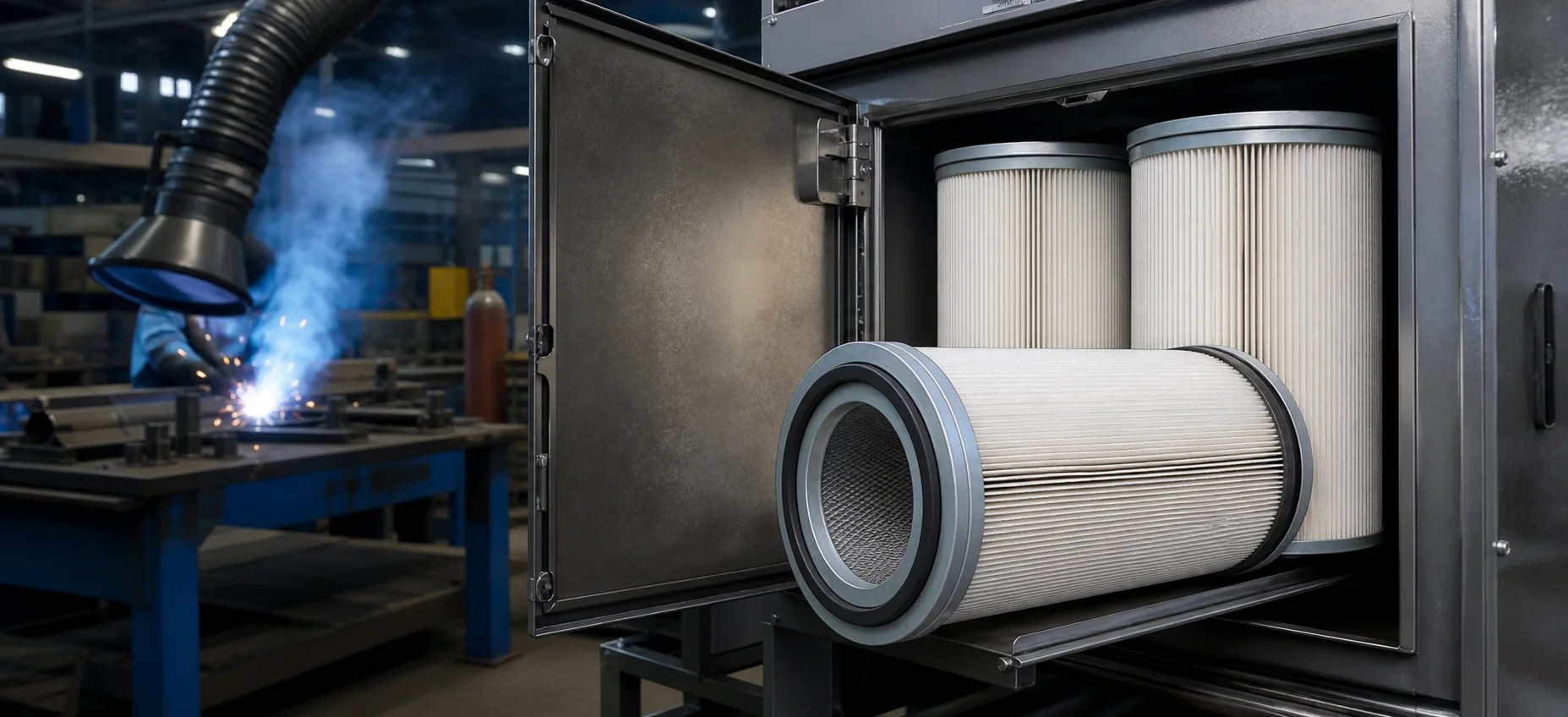
For welding-fume filtration, start with the process, capture arrangement, collector configuration, installed filter construction, operating condition, and the evidence required for the replacement review.
A useful welding fume filter inquiry connects the process, collector style and replacement cartridge details. This prevents a part-number match from ignoring media, airflow or gasket differences.
Welding Fume Application
Manual stations, robotic cells and mixed fabrication areas may need different capture methods, airflow assumptions and cartridge media review.
Review cartridge filtersReplacement Cartridge Fit
Match outside diameter, inside diameter, length, end cap style, gasket location, bolt hole pattern and clean-side seal details.
Use cross reference guideMedia and Surface Loading
Welding fumes are fine and can load quickly, so media, pleat spacing, surface treatment and cleaning behavior should be reviewed together.
Compare filter mediaMaintenance Symptoms
Rising differential pressure, dust leakage, shortened pulse cycles or damaged gaskets can signal the replacement filter needs a spec review.
Check replacement signsProduct Visuals
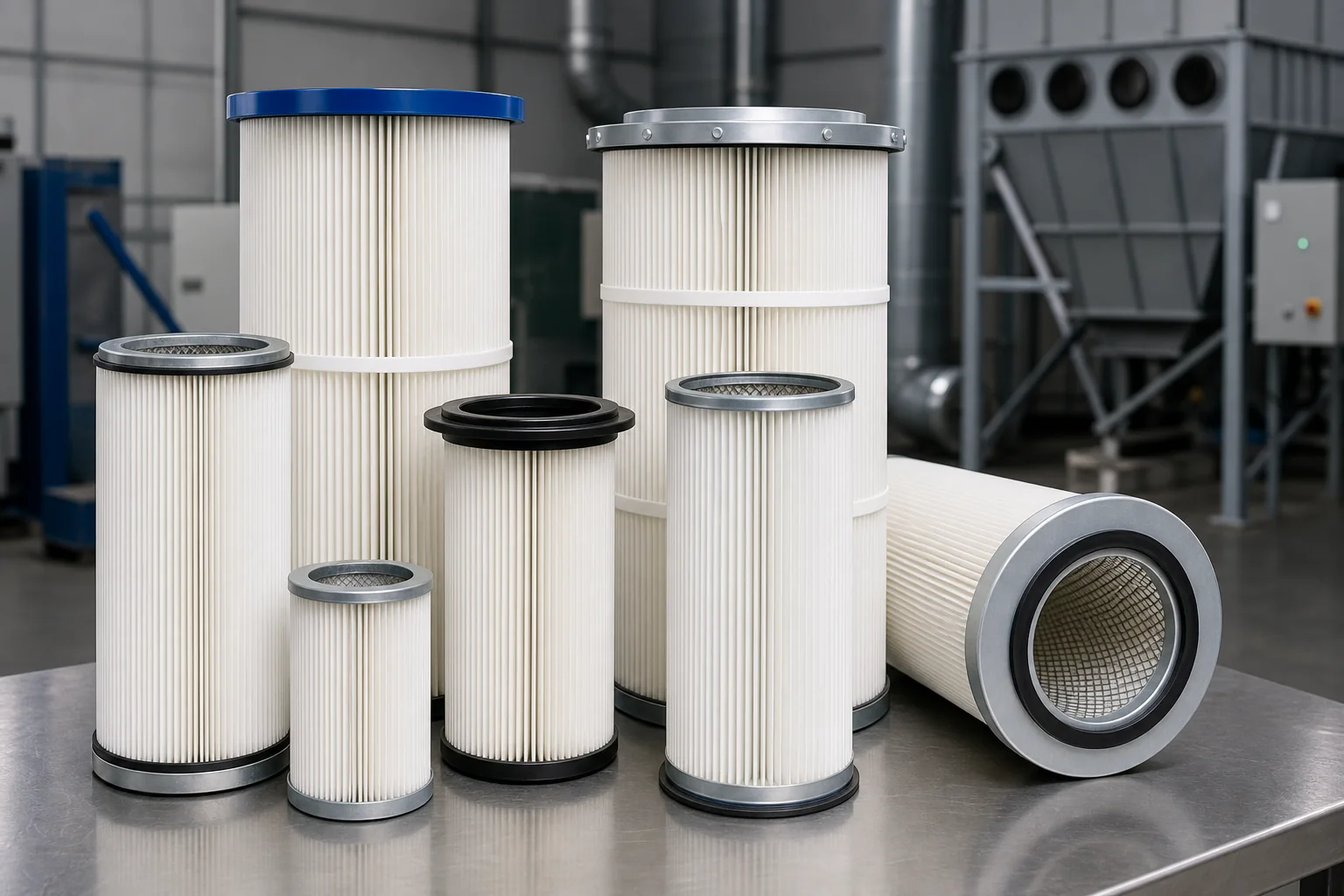
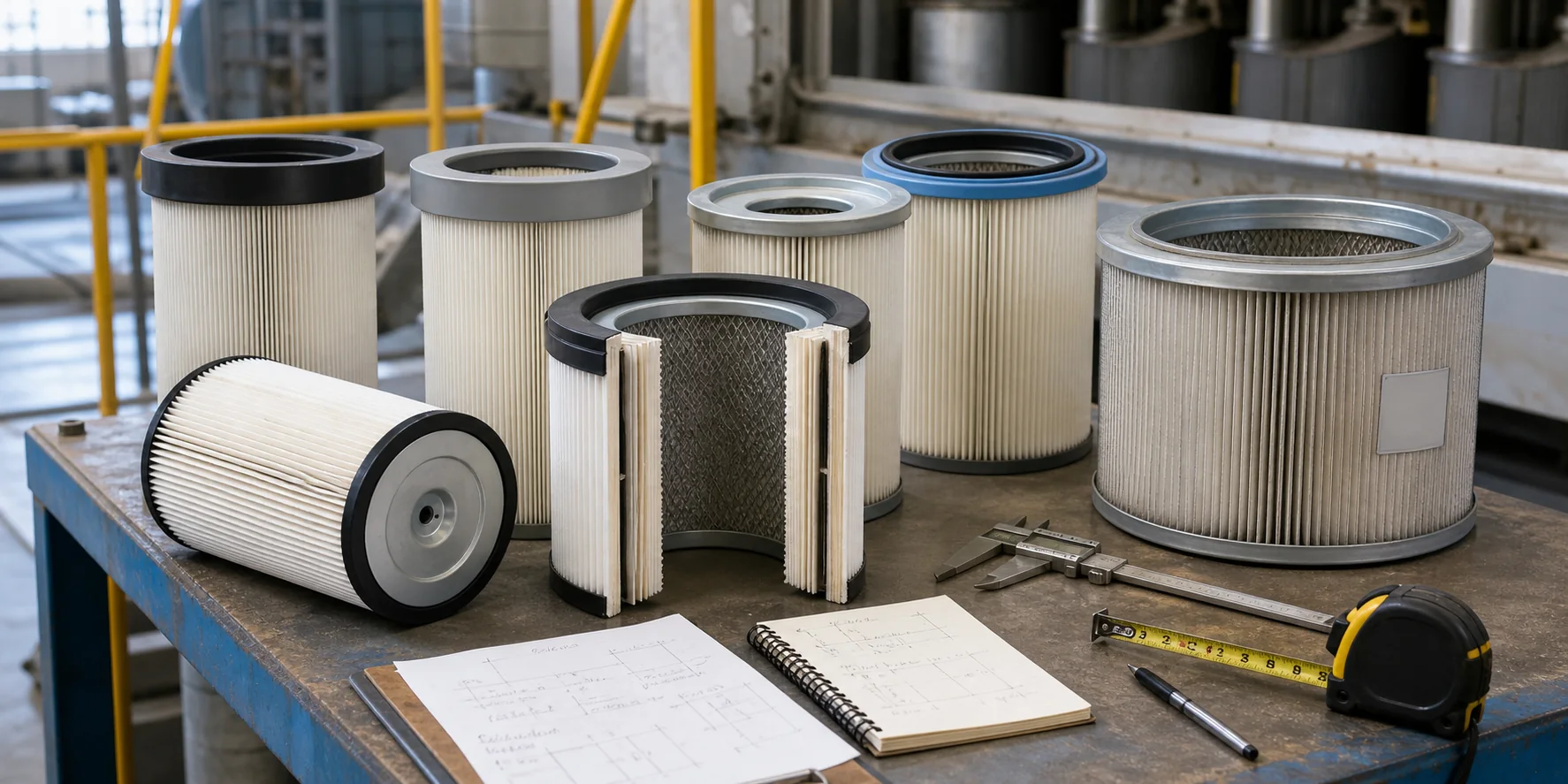
Use photos to connect the replacement part with the operating condition.
These visuals are intended for specification review: product fit, current condition, field measurements and the process around the filter.
Specification Matrix
Welding fume filter RFQ matrix
Welding fume filters should be quoted from the welding process, collector type, cartridge geometry and maintenance symptoms together.
| Welding / Collector Condition | What to Send | Why It Matters | Priority |
|---|---|---|---|
| Manual welding stationsarms, hoods, mixed operator positions | Photos of capture point, collector model, cartridge count and loading pattern | Manual stations can see uneven loading and operator-dependent capture. | |
| Robotic weld cellsenclosed or semi-enclosed weld areas | Cell layout, duty cycle, material welded, current cartridge part number and changeout interval | Robotic duty cycles can create steady high fume loading. | |
| MIG, stick, flux-coredfine metal oxide fume | Welding type, base metal, wire/rod, coating, oil, current media and pressure drop history | Fine fume can blind media or increase cleaning demand. | |
| Laser / thermal cutting supportfine fume plus possible spark exposure | Spark control notes, prefilter or arrestor details, temperature and dust sample if available | Spark and fume behavior should not be solved by filter media alone. | |
| Cartridge geometryphysical replacement fit | OD, ID, length, open/closed end, flange, gasket, bolt pattern and clean-side seal photos | Correct media cannot fix a poor mechanical seal. | |
| Current failure modewhy replacement is needed | High DP, dust leak, damaged gasket, collapsed media, broken end cap or short service life | Failure mode points to fit, media, cleaning or application changes. |
Note: Send photos when the drawing, label or OEM number is incomplete. A small construction detail can change fit, seal quality or service life.
RFQ Workflow
A practical welding fume filter matching workflow.
This workflow is designed for industrial buyers who may have only a sample, photos, field measurements or partial reorder information.
Identify the weld process
Record welding type, duty cycle, material, coating or oil and whether capture is source, ambient or enclosure-based.
Measure the cartridge
Send OD, ID, length, end caps, gasket face, bolt holes and any old label or part number.
Review media behavior
Share differential pressure, pulse cleaning setting, dust release issues and service life history.
Check seal and hardware
Photograph gasket, mounting plate, clean-side seal and any deformed end cap or latch area.
Quote with context
Send quantity, urgency, shipping country, replacement target and any sample cartridge photos.
Field Diagnosis
Common welding fume filter replacement issues to diagnose before ordering.
Before placing a repeat order, note whether the current issue comes from fit, media, cleaning system, operating change or mechanical wear.
FAQ
Common questions before quoting.
Use these answers to prepare the first RFQ email or WhatsApp photo set.
What information is needed to quote welding fume filters?
Send cartridge OD, ID, length, end cap style, gasket location, mounting details, collector model, part number if available, welding process, current media, quantity and photos of the old filter and filter housing.
Can a cartridge part number be cross-referenced without dimensions?
A part number is helpful, but dimensions and end cap photos should still be checked because similar cartridges may use different gaskets, mounting holes, media or clean-side seals.
Which media is used for welding fume filters?
The media depends on the welding process, dust load, cleaning style and collector design. Cellulose blend, spunbond, nanofiber and FR or conductive options may be reviewed, but the final choice should be based on real operating conditions.
When should welding fume cartridges be replaced?
Replacement is usually reviewed when differential pressure stays high after cleaning, dust leakage appears, cartridges are damaged, gaskets fail, pulse cleaning cannot recover airflow or filter life becomes unusually short.
Can FilterBagWorks quote filters for an OEM dust collector?
Yes. Brand and OEM part numbers can be used for identification and compatibility review. They do not imply brand authorization or OEM affiliation.