How to Measure Filter Bags for Dust Collector Replacement
Measure filter bags by diameter or flat width, overall length, top construction, bottom construction, snap band or ring details, cage fit, media and quantity. If no drawing is available, send photos of the old bag, tube sheet, cage and label so the replacement can be reviewed.
Page Route
A quote-ready filter bag measurement is more than diameter and length.
Top seal, bottom style and cage support often decide whether a replacement bag fits correctly. Use this guide when the old drawing is missing or the plant only has a sample. Filter bag sizes should be recorded with the top and bottom construction, cage fit, and tube-sheet dimensions; diameter and length alone rarely define a replacement.
Measure Diameter or Flat Width
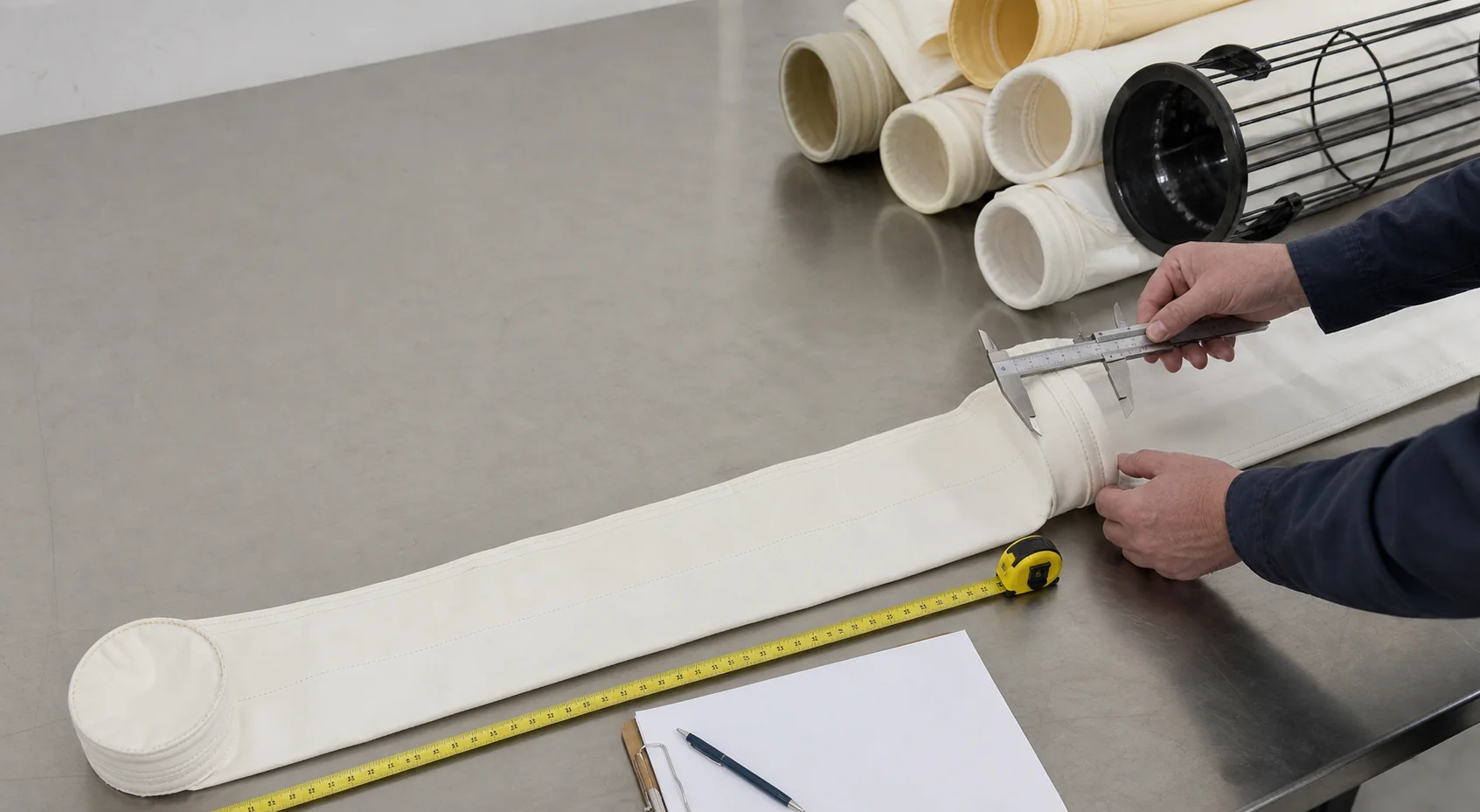
For round bags, measure diameter if the bag is open, or flat width when it is laid flat. Note how the measurement was taken.
Measurement matrixConfirm Overall Length
Measure from the top edge or snap band reference to the bottom seam, then note any cuff or ring extension.
Filter bag productsRecord Top Construction
Snap band, cord, ring, flange, cuff and raw-edge tops need photos and dimensions because the seal method changes.
Pulse jet bagsCheck Cage Fit
Cage diameter, wire count, ring spacing and rough welds affect the bag fit and can cause early wear.
Custom filtersProduct Visuals
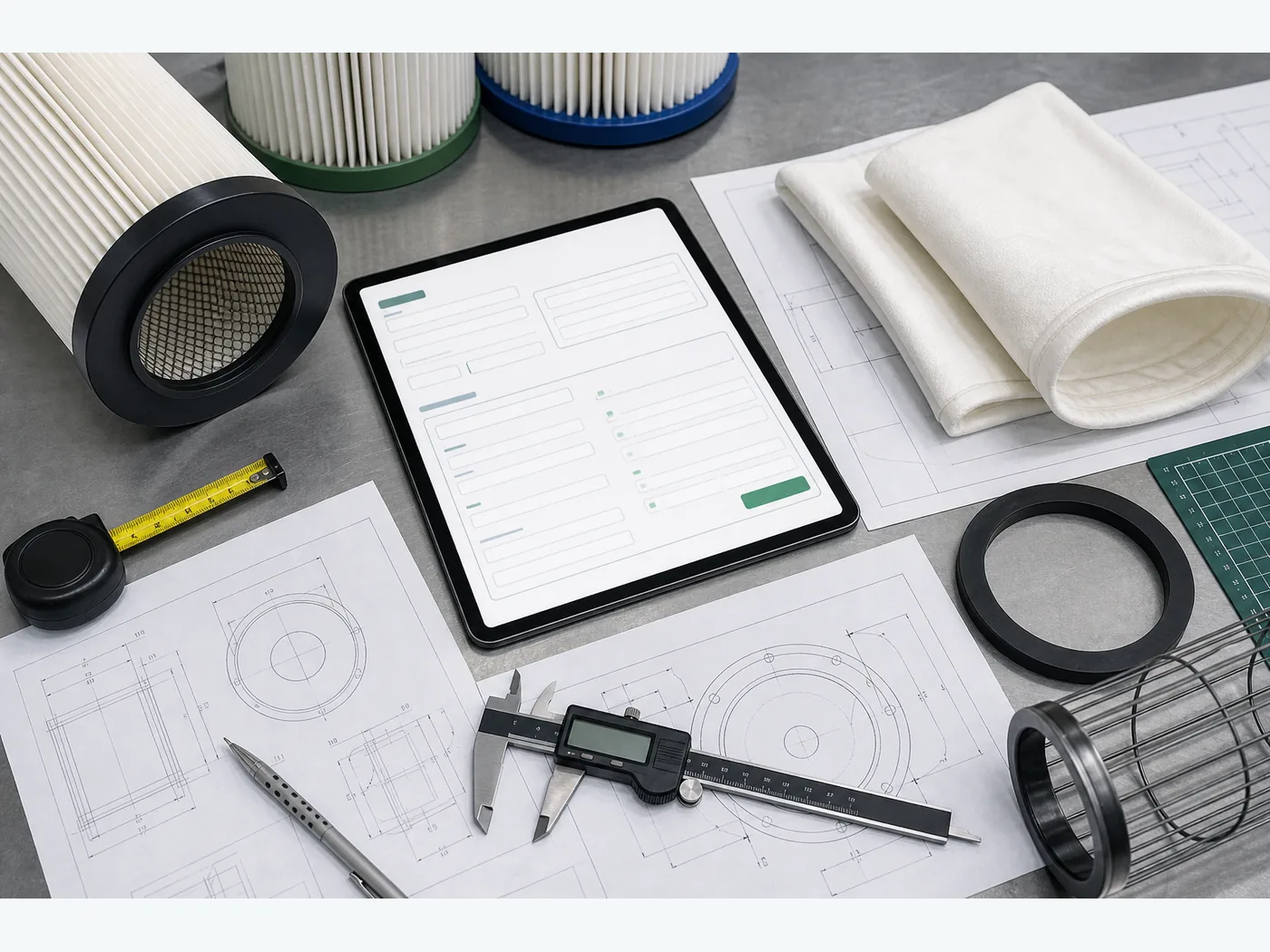
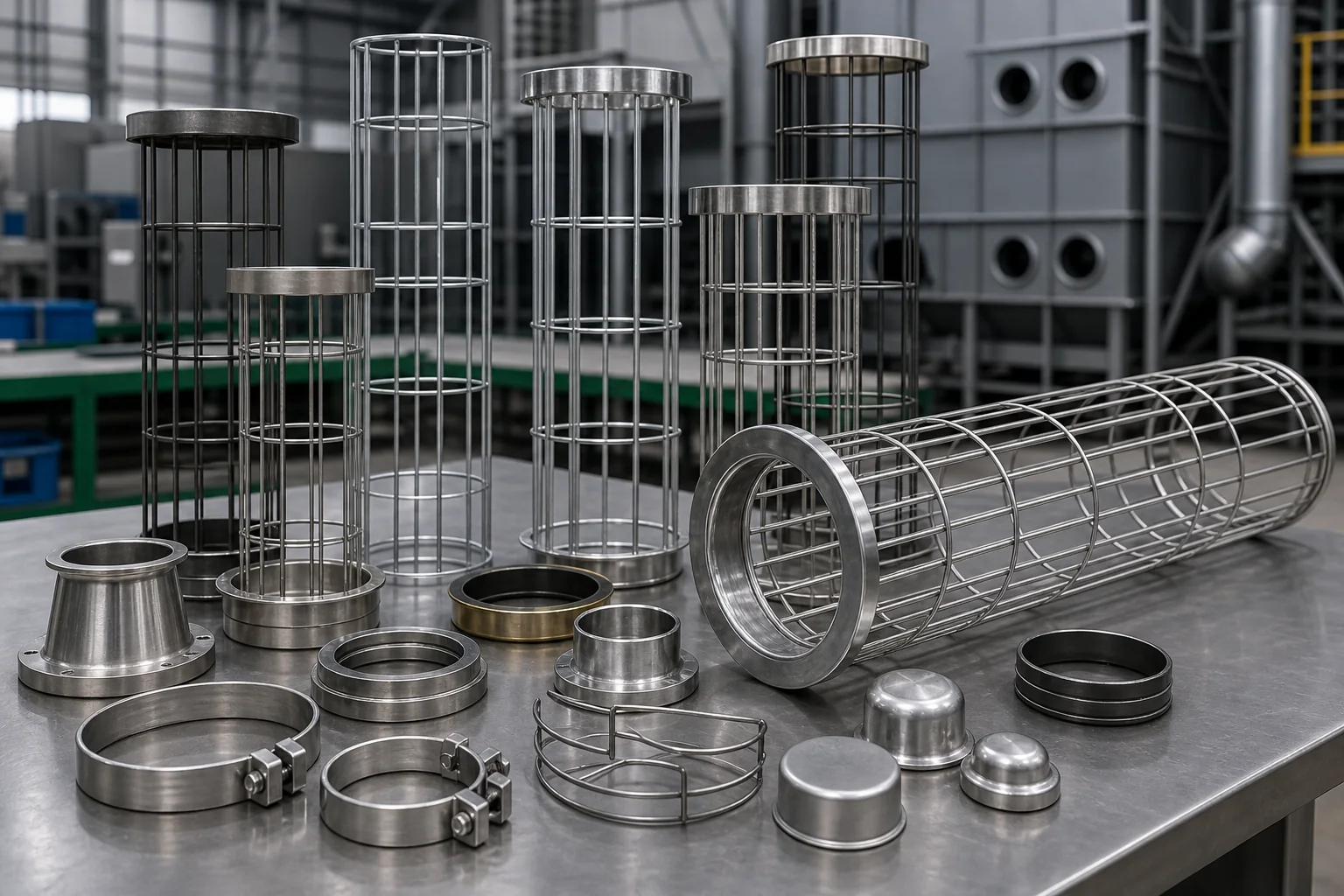
Use photos to connect the replacement part with the operating condition.
These visuals are intended for specification review: product fit, current condition, field measurements and the process around the filter.
Specification Matrix
Filter bag measurement checklist
Use this table to prepare a quote request when you have an old bag, a used sample or field measurements instead of a drawing.
| Measurement Area | How to Measure | Photos / Notes to Send | Priority |
|---|---|---|---|
| Diameter or flat widthround bag body size | Measure open diameter or lay bag flat and measure flat width. State which method was used. | Bag size determines cage fit and tube sheet relationship. | |
| Overall lengthtop reference to bottom seam | Measure from the top edge, snap band or ring reference to the bottom seam or disc. | Incorrect length can cause poor bottom clearance or seal stress. | |
| Top constructionsnap band, cuff, ring or flange | Send closeups of bead, cord, ring, flange, stitching, felt cuff and tube sheet opening if possible. | Most fit errors happen at the top seal. | |
| Bottom constructiondisc, cuff, tail, wear pad | Photograph bottom seam, disc, reinforcement, wear pad and abrasion marks. | Bottom style affects installation and wear life. | |
| Cage fitdiameter, length, wire count | Measure cage OD, ring spacing, venturi and rough welds; send cage photos. | Bad cage fit can damage a correctly made bag. | |
| Media and finishfelt, woven, membrane or treatment | Send media color, surface, label, dust type, temperature and failure mode. | Media selection affects performance and life. |
Note: Send photos when the drawing, label or OEM number is incomplete. A small construction detail can change fit, seal quality or service life.
RFQ Workflow
How to measure a filter bag when no drawing exists.
This workflow is designed for industrial buyers who may have only a sample, photos, field measurements or partial reorder information.
Lay the bag flat
Smooth the old bag without stretching it. Photograph full length, top, bottom and seam.
Measure width and length
Record flat width or diameter, overall length and any top or bottom cuff dimensions.
Document top style
Take closeups of snap band, ring, cord, flange, grommet, raw edge or cuff details.
Check bottom and cage
Photograph bottom disc, reinforcement, wear marks and the cage that supports the bag.
Send operating notes
Add dust type, temperature, moisture, current media, failure mode and order quantity.
Field Diagnosis
Measurement details that prevent wrong replacement filter bags.
Before placing a repeat order, note whether the current issue comes from fit, media, cleaning system, operating change or mechanical wear.
FAQ
Common questions before quoting.
Use these answers to prepare the first RFQ email or WhatsApp photo set.
Should I measure filter bag diameter or flat width?
Either can be useful if you clearly state the method. If the bag is laid flat, record flat width. If the bag is open and round, record diameter. Photos help interpret field measurements.
Where do I start measuring filter bag length?
Use a clear reference point such as the top edge, snap band center, ring or cuff edge, then measure to the bottom seam or bottom disc. Tell us which reference you used.
What top style details are important?
Send photos and dimensions for snap band, cord, ring, flange, cuff, grommet, raw edge, band width, bead position and tube sheet opening if available.
Do you need cage measurements too?
Yes when possible. Cage OD, length, wire count, ring spacing, venturi and rough welds can affect fit and wear life.
Can you quote from a sample bag with no drawing?
Yes. Send photos, measurements, sample details, current media if known, dust conditions and quantity. A physical sample can be useful for unusual top or bottom constructions.
After measurement
Carry the measured construction into the correct product and RFQ path.
Keep diameter, overall length, top and bottom construction, seam or wear details, current media or label and quantity together. Add cage photos and measurements when cage fit is part of the replacement review.
Material families are shown as separate product routes; measurements alone do not determine media or finish.
Cage form and finish remain separate fit inputs; do not infer dimensions or tolerances from catalogue imagery.
First-party source: Guanlin product catalogue, pp. 9, 10 and 13. Existing measurement steps remain unchanged.