When to Replace Dust Collector Filters: Practical Signs for Bags and Cartridges
Use this guide to decide when dust collector filter bags or cartridge filters should be inspected, matched or replaced. The right timing depends on differential pressure trend, airflow, dust leakage, cleaning behavior, gasket condition, media damage, process changes and safety requirements.
Page Route
Replacement timing should come from operating evidence.
A filter can be old but still serviceable, or relatively new but already unsuitable. Use a short evidence checklist before reordering the same spec.
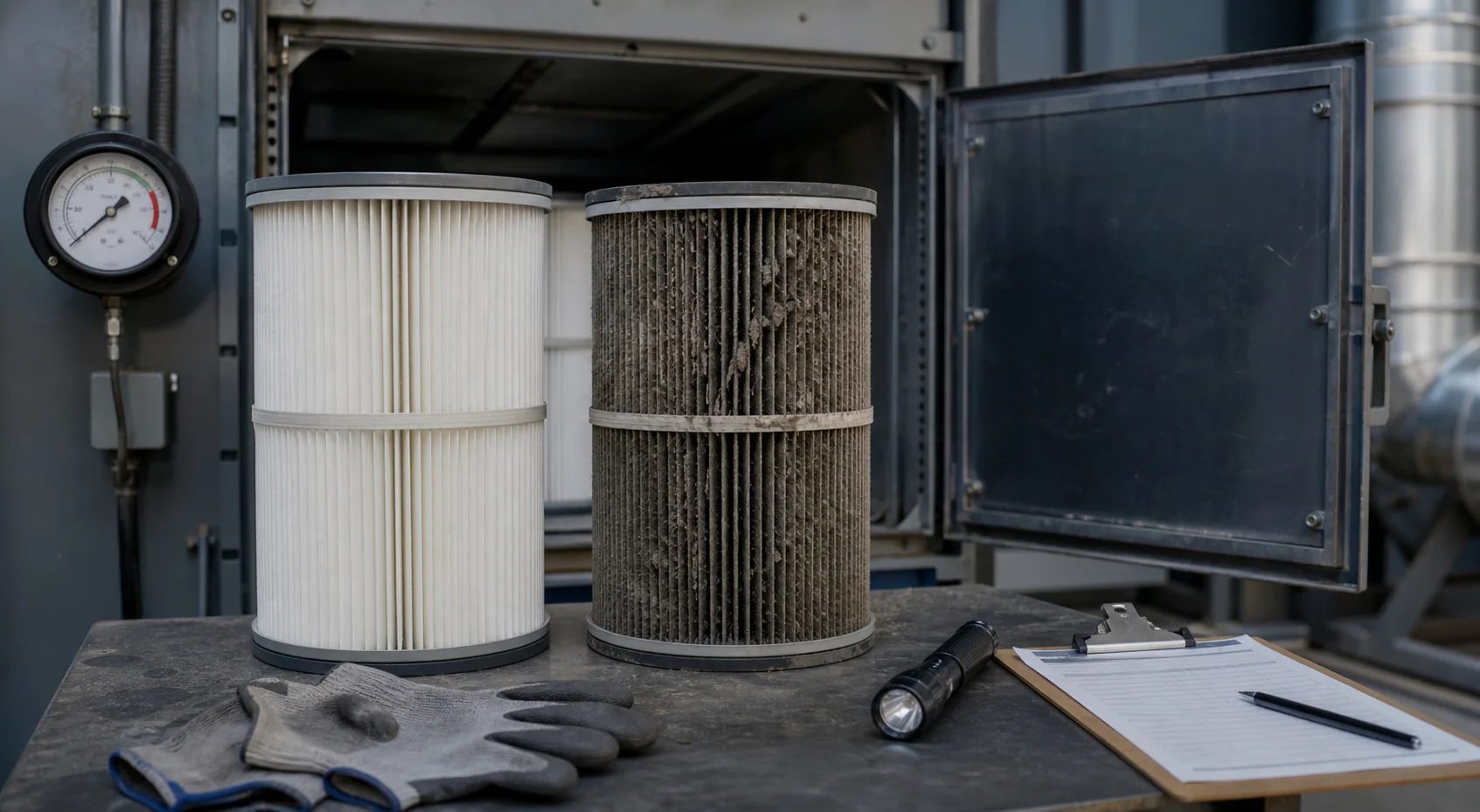
Differential Pressure Stays High
If cleaning no longer recovers airflow, filters may be blinded, overloaded, wet, damaged or mismatched to the dust.
Check replacement matrixDust Leakage or Visible Emissions
Clean-side dust, stack dust or product contamination can point to leaks, damaged media, poor gasket seal or installation issues.
Replacement reviewShorter Cleaning Cycles
Frequent pulsing, high compressed air use or unstable airflow may mean the filter is not releasing cake well.
Review mediaVisible Damage
Torn bags, collapsed cartridges, brittle media, failed seams, cage wear or worn gaskets usually need replacement investigation.
Send photosProduct Visuals
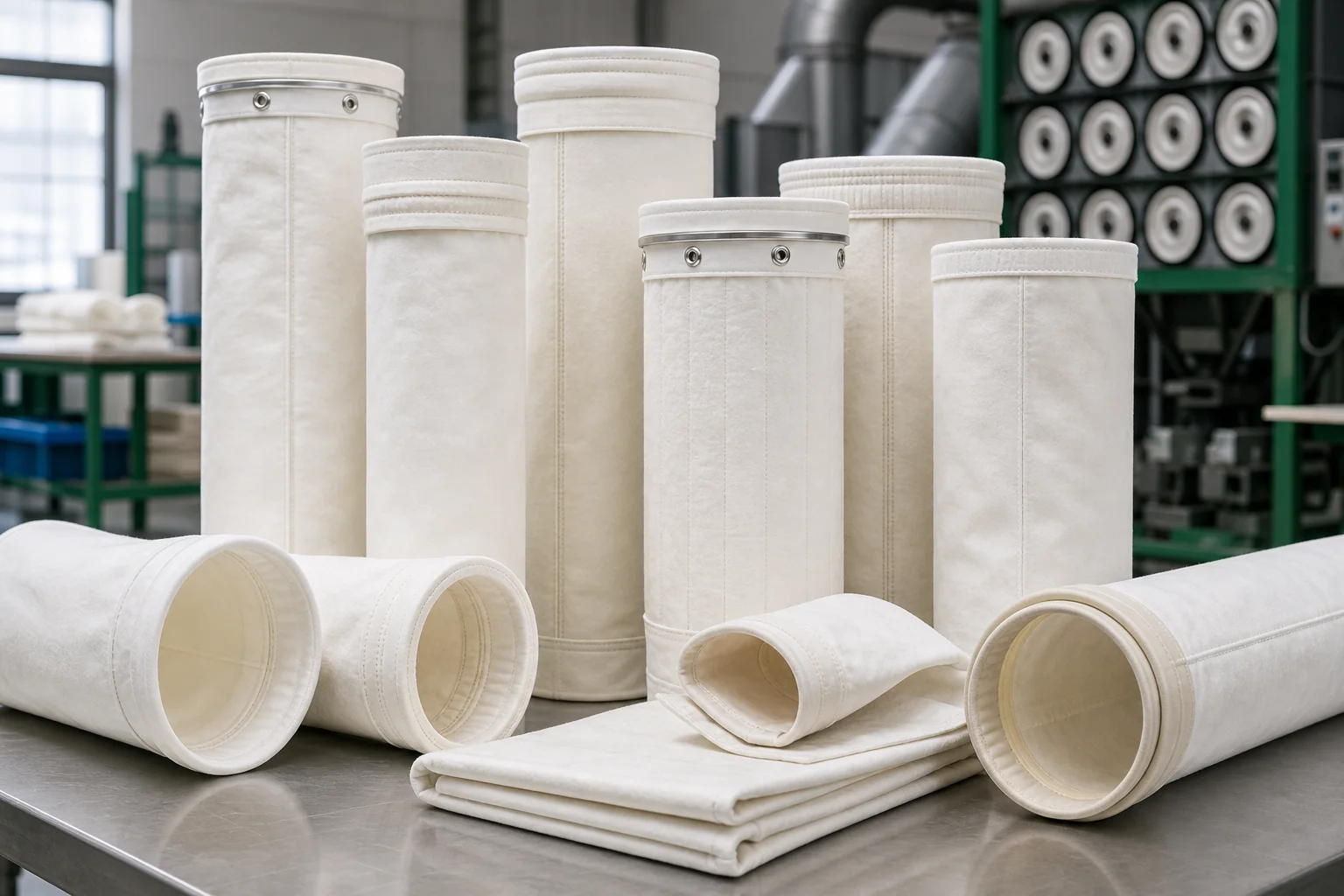
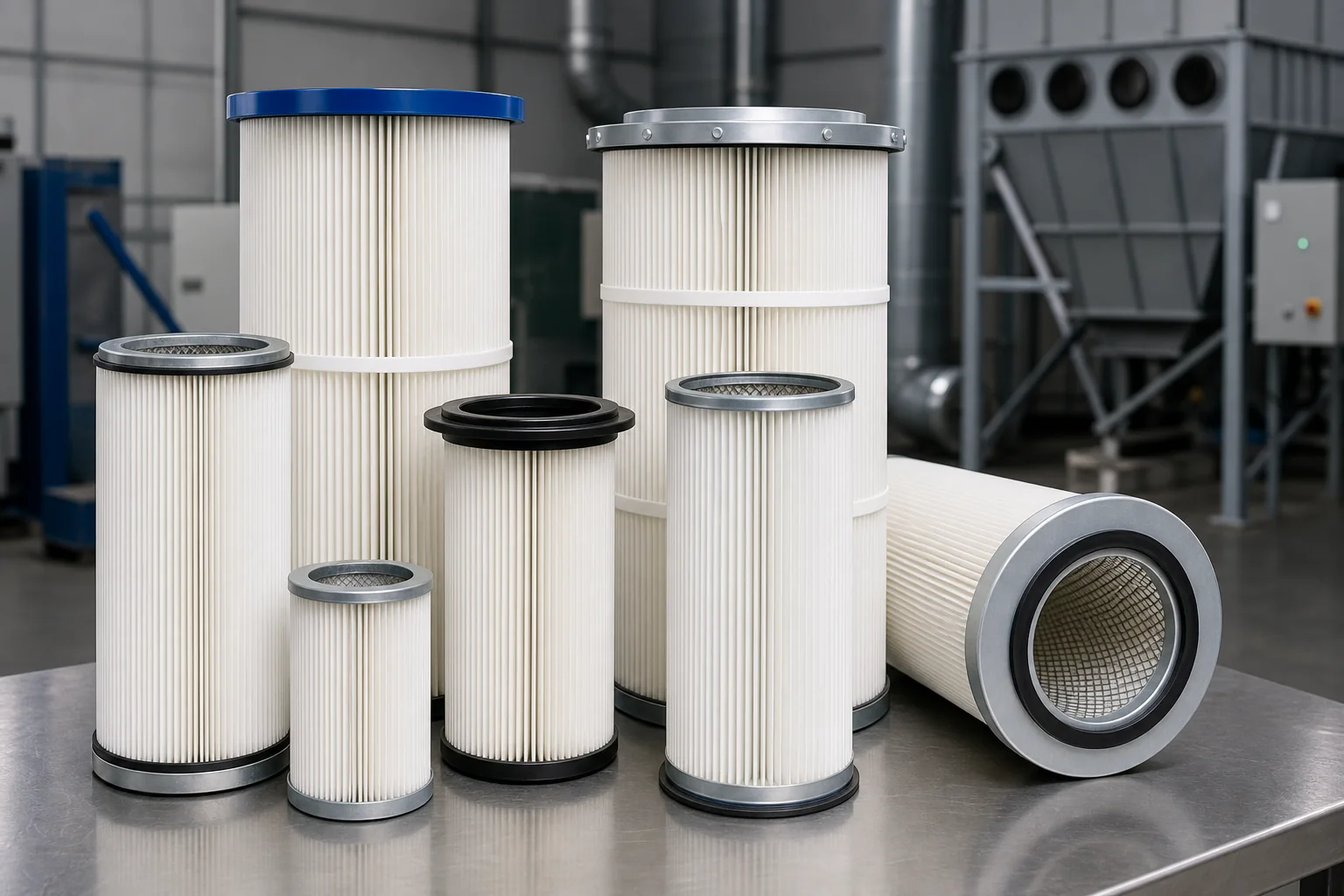
Use photos to connect the replacement part with the operating condition.
These visuals are intended for specification review: product fit, current condition, field measurements and the process around the filter.
Specification Matrix
Dust collector filter replacement signs
Use this as a practical inspection guide before reordering filter bags, cartridge filters or baghouse filter sets.
| Replacement Signal | What to Check | What It May Mean | Priority |
|---|---|---|---|
| High differential pressureDP does not recover after cleaning | Record baseline, current DP, pulse settings, compressed air and dust load | Media blinding, excessive loading, moisture, poor cleaning or wrong media. | |
| Dust leakagedust on clean side or stack | Inspect tube sheet, gaskets, end caps, seams, cages and installation seating | Leak path, media tear, gasket failure or wrong fit. | |
| Short filter lifefilters fail earlier than prior orders | Compare process changes, media, batch, cleaning energy, dust moisture and operator notes | Changed process or replacement spec mismatch. | |
| Visible media damageholes, tears, abrasion, collapse | Photograph damage location, cage contact, bottom wear, end caps and seams | Mechanical wear, rough cages, over-pulsing, chemical attack or installation damage. | |
| Frequent pulsingcleaning system works harder | Check solenoids, diaphragm valves, pressure, pulse interval and dust cake behavior | Cleaning system issue or media that cannot release dust well. | |
| Process changenew material, rate, humidity or temperature | Send current dust, temperature, moisture, chemistry and production rate changes | Old media may not fit the new operating condition. |
Note: Send photos when the drawing, label or OEM number is incomplete. A small construction detail can change fit, seal quality or service life.
RFQ Workflow
Replacement decision workflow before ordering.
This workflow is designed for industrial buyers who may have only a sample, photos, field measurements or partial reorder information.
Check DP history
Compare baseline, current reading, post-cleaning recovery and recent process changes.
Inspect filters and seals
Look at media, seams, top seal, gasket, end cap, cage contact and clean-side dust.
Confirm cleaning system
Review pulse pressure, valves, sequence, compressed air supply and cleaning frequency.
Identify failure mode
Separate blinding, abrasion, leakage, collapse, chemical attack and installation damage.
Quote with evidence
Send photos, dimensions, part numbers, operating notes and quantity for replacement review.
Field Diagnosis
Do not replace filters blindly when these clues appear.
Before placing a repeat order, note whether the current issue comes from fit, media, cleaning system, operating change or mechanical wear.
FAQ
Common questions before quoting.
Use these answers to prepare the first RFQ email or WhatsApp photo set.
What differential pressure means filters should be replaced?
There is no universal number. Compare the collector’s normal baseline, current reading, post-cleaning recovery and airflow need. A stable high DP that no longer recovers after cleaning is a strong replacement review signal.
Should dust collector filters be replaced by calendar schedule?
A schedule helps planning, but replacement should also consider DP trend, visual condition, leakage, process changes, media damage and cleaning system behavior.
What photos help diagnose filter failure?
Send full filter photos plus closeups of torn media, gasket, end cap, snap band, cage contact, bottom wear, clean-side dust and any label or part number.
Can a media change improve filter life?
Sometimes. If failure comes from moisture, fine dust, static risk, abrasion, temperature or poor release, a media or finish review may be more useful than simply replacing the same filter.
Do filter bags and cartridge filters use the same replacement signs?
They share signs such as high DP, leakage and damaged media, but bags also require cage and tube sheet review while cartridges require end cap, gasket and pleat pack review.