Cartridge Filter Cross Reference for Dust Collector Replacement
Cross-reference a dust collector cartridge by matching the old part number with OD, ID, length, end caps, gasket location, media, photos, and collector model. A part number alone does not confirm physical fit or the replacement media path.
Page Route
A better cross reference page starts with proof points buyers actually have.
Many buyers only have a used cartridge, an old invoice, a blurry label or a collector model. This guide helps organize the identification details available for a cartridge quotation.
If You Have a Part Number
Send the number, brand name, collector model and at least one photo of the cartridge end caps before assuming a direct match.
Replacement programIf the Label Is Missing
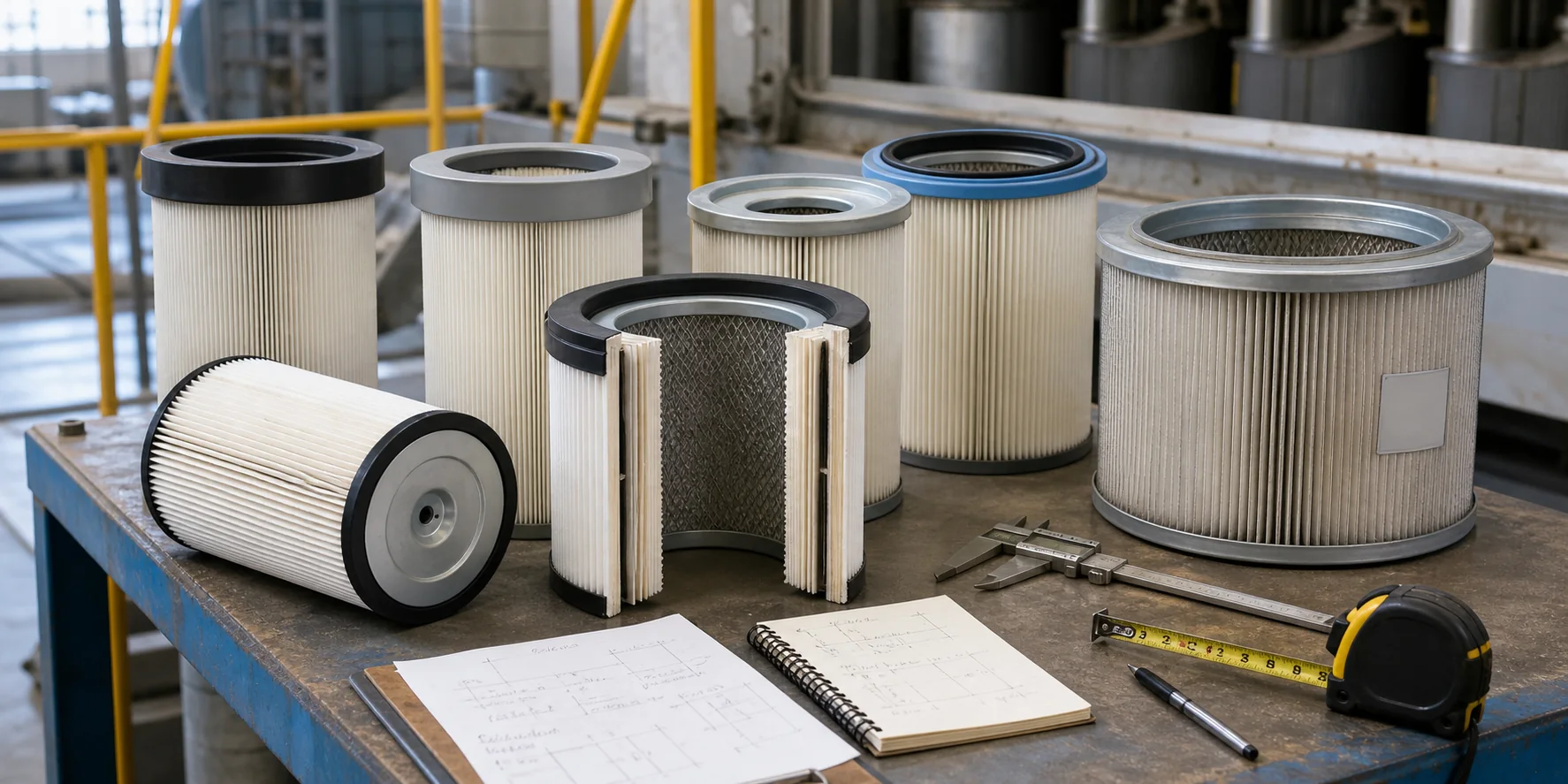
Measure OD, ID, overall length, end cap style, gasket face and mounting holes, then include top and bottom photos.
Measurement checklistIf the Current Filter Failed Early
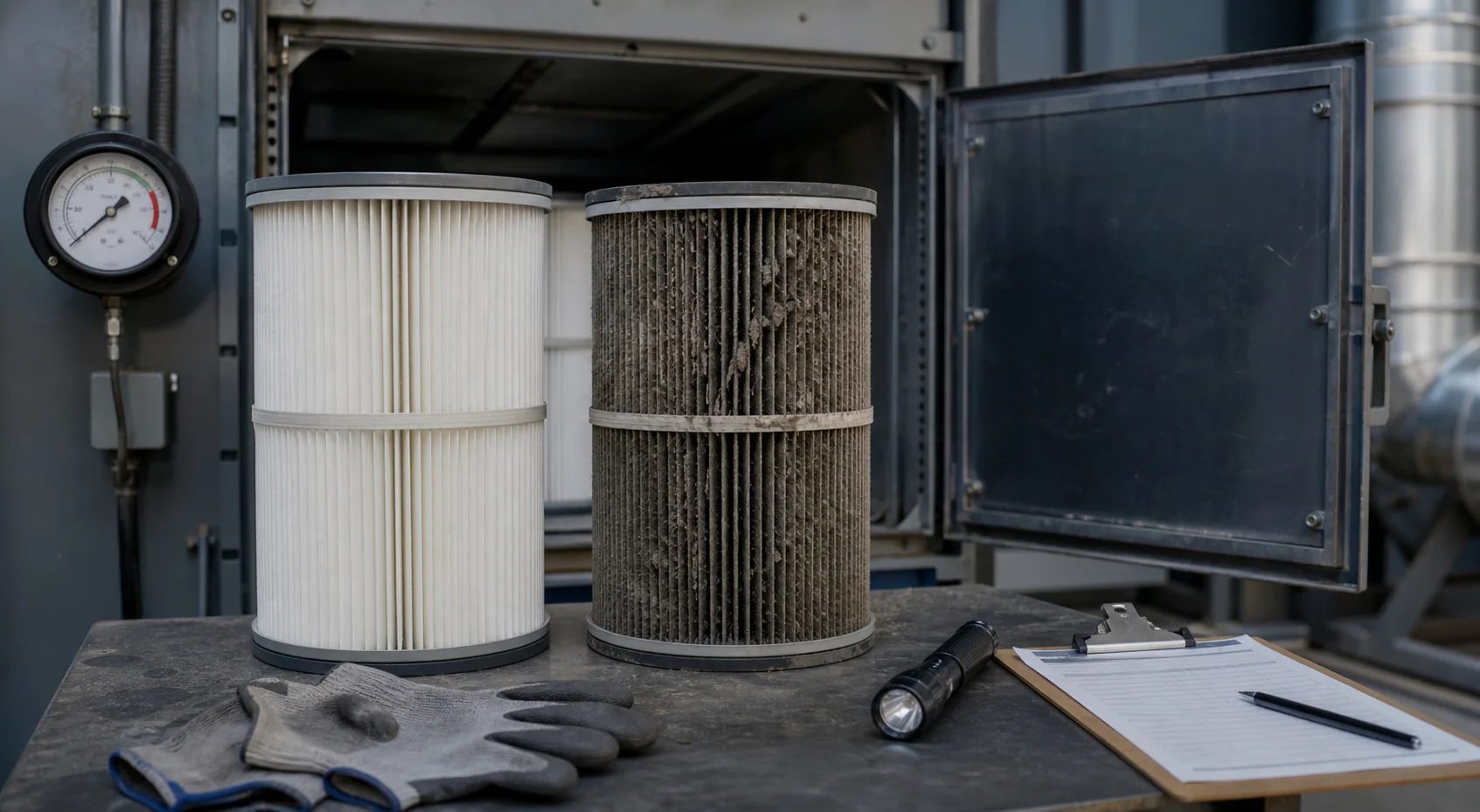
Add pressure drop history, dust leakage, collapsed media, gasket damage or short cycle notes so the spec can be reviewed.
Replacement signsIf Media Is Unknown
Provide dust type, moisture, temperature, static risk and application details so the replacement does not copy the wrong media.
Filter mediaProduct Visuals
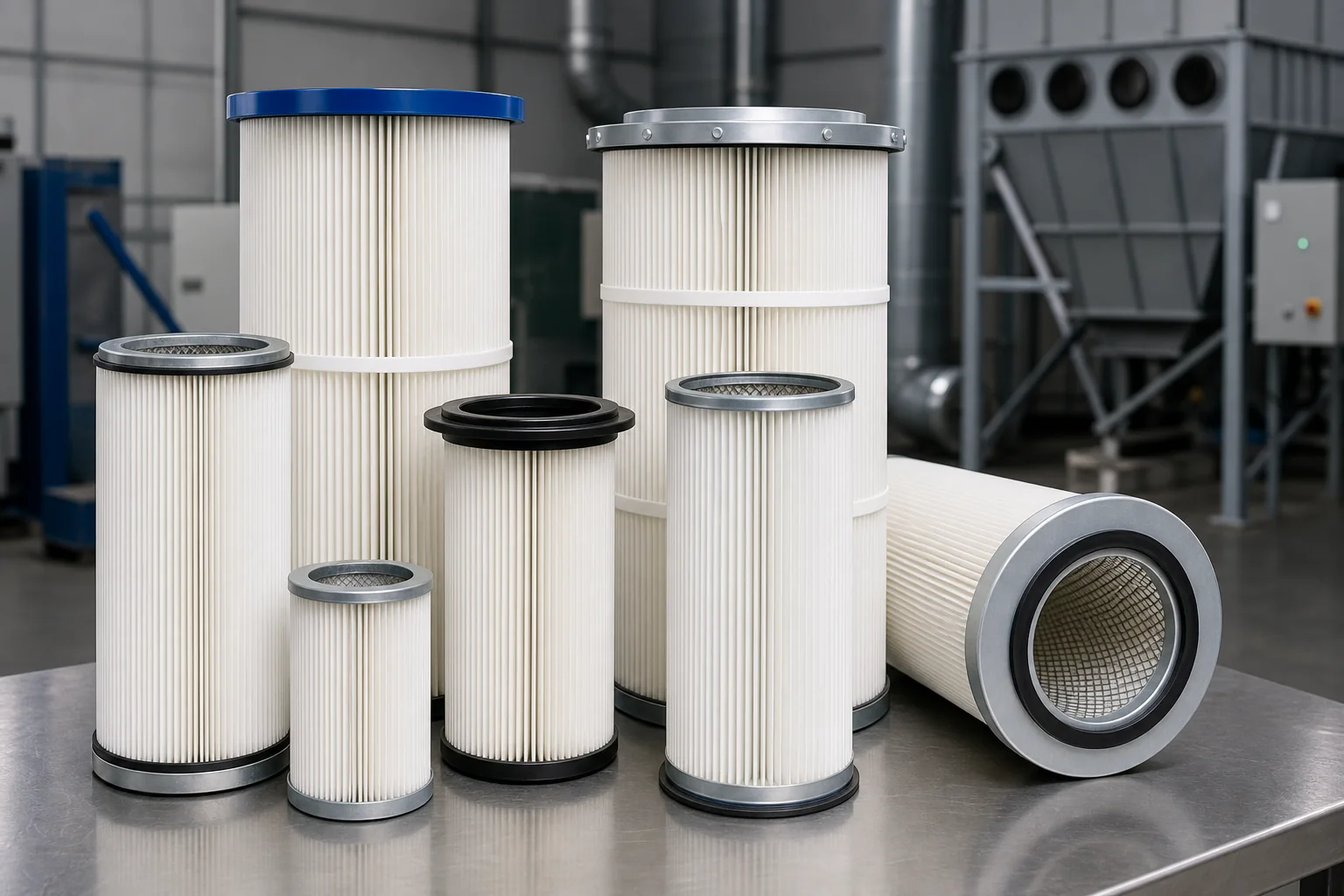
Use photos to connect the replacement part with the operating condition.
These visuals are intended for specification review: product fit, current condition, field measurements and the process around the filter.
Specification Matrix
Cartridge filter cross reference checklist
Use this matrix when the buyer has an old filter, partial number, sample or collector model but no current drawing.
| Cross Reference Input | What to Send | How It Is Used | Priority |
|---|---|---|---|
| Part number / labelold label, invoice code, collector model | Full code, brand name, collector model, old quote or reorder file | Narrows the likely cartridge family, but should not replace measurements. | |
| Cartridge dimensionsOD, ID and overall length | Measure outside diameter, inside diameter, total length and any flange height | Confirms the cartridge can seat and clear the housing. | |
| End cap styleopen, closed, flange, pan, bolt hole | Photos of both ends, mounting holes, metal or urethane parts and clean-side face | End cap mismatch can prevent installation or create leaks. | |
| Gasket and sealmaterial, position, thickness | Gasket face photo, diameter, compression marks and seal-side orientation | A small gasket difference can bypass dust into the clean air plenum. | |
| Media and pleatscellulose blend, spunbond, nanofiber or unknown | Media color, surface, pleat spacing, inner core, flame-retardant or conductive notes | Media affects pressure drop, dust release and service life. | |
| Operating conditionwhy a replacement is needed | Dust type, moisture, temperature, static risk, pressure drop and failure photos | Prevents copying a cartridge that was already unsuitable. |
Note: Send photos when the drawing, label or OEM number is incomplete. A small construction detail can change fit, seal quality or service life.
RFQ Workflow
Cross-reference workflow for incomplete cartridge filter information.
This workflow is designed for industrial buyers who may have only a sample, photos, field measurements or partial reorder information.
Photograph the old filter
Capture the label, both ends, side pleats, gasket face, inner core and any damaged areas.
Measure core geometry
Record OD, ID, overall length, flange depth, bolt holes and gasket position.
Identify the collector
Send collector brand, model, cartridge count and how the filter is mounted.
Review media needs
Add dust type, moisture, temperature, static risk, cleaning method and current issue.
Quote replacement options
Confirm quantity, delivery country, private label needs and whether a sample is available.
Field Diagnosis
Cross-reference mistakes that cause fit or performance issues.
Before placing a repeat order, note whether the current issue comes from fit, media, cleaning system, operating change or mechanical wear.
FAQ
Common questions before quoting.
Use these answers to prepare the first RFQ email or WhatsApp photo set.
Can you cross-reference cartridge filters from an OEM part number?
Yes. Send the part number, collector model and photos for identification. Brand names and OEM numbers are used only to describe compatibility requirements, not to imply authorization or affiliation.
What if I do not know the cartridge filter part number?
Send OD, ID, overall length, end cap photos, gasket details, mounting style, collector model and any old invoice or sample photos. These details are often enough to start a replacement review.
Why do you ask for photos if I already have dimensions?
Photos reveal end cap shape, gasket face, media surface, pleat condition, inner core and mounting details that can be missed in a simple OD and length measurement.
Can the replacement media be changed during cross-reference?
Yes, if the current filter is failing because of fine dust, moisture, static risk, poor release or short service life. Media changes should be tied to operating conditions.
Should I send a sample cartridge?
A sample is useful when the cartridge has unusual end caps, unknown media, missing labels, retrofit hardware or a history of fit problems.